


Poker is more than just a card game played in smoke-filled back rooms or under the blinding lights of tournament stages. It is a complex battle of wits, mathematical probability, and psychological warfare. Whether you want to dominate home games with friends or understand the intricate strategies used by professionals in high-stakes tournaments, mastering poker requires a solid foundation of rules, disciplined bankroll management, and an ability to read your opponents.
The Core Foundations of Poker
At its core, poker is a family of card games where players wager over which hand is best according to specific game rules. While there are countless variants played worldwide, Texas Hold’em remains the undisputed king of the poker world, serving as the standard format for major global tournaments and online platforms.
Understanding Hand Rankings
Before you place a single chip in the center of the table, you must memorize the standard poker hand rankings. These rankings remain consistent across almost all popular poker variants. From highest to lowest, the hand rankings are:
-
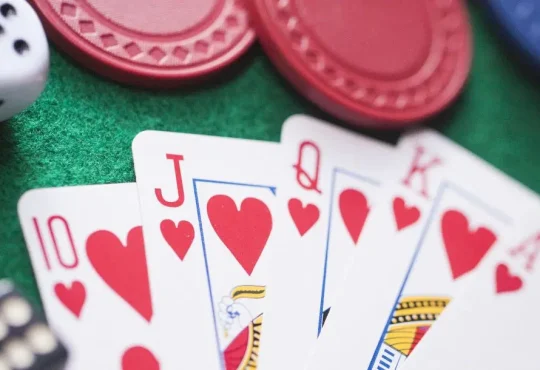
Royal Flush: Ace, King, Queen, Jack, and Ten, all of the same suit.
-
Straight Flush: Five consecutive cards of the exact same suit.
-
Four of a Kind: Four cards of identical rank, alongside any fifth card.
-
Full House: Three cards of one rank combined with a pair of another rank.
-
Flush: Any five cards of the same suit, not in sequence.
-
Straight: Five cards in sequential order of mixed suits.
-
Three of a Kind: Three cards of the same rank and two unrelated side cards.
-
Two Pair: Two distinct pairs of cards accompanied by a fifth card.
-
One Pair: Two cards of matching rank and three unmatched side cards.
-
High Card: The highest card in your hand when no other combination is made.
The Structure of Play: Betting Rounds and Blinds
Poker relies on forced bets to seed the pot and give players a reason to fight for chips. In games like Texas Hold’em and Omaha, these forced bets are known as the small blind and the big blind. Two players post these mandatory amounts before any cards are dealt, rotating clockwise after every hand.
Once the blinds are posted, the game proceeds through distinct betting phases:
-
Pre-Flop: Players receive two private hole cards. The first round of betting begins with the player to the left of the big blind.
-
The Flop: The dealer places three community cards face up on the board. A second round of betting ensues.
-
The Turn: A fourth community card is dealt face up. Players engage in the third betting round.
-
The River: The fifth and final community card is revealed. The final betting round takes place before the showdown.
During these rounds, players can choose to check (pass the action if there is no bet), bet (wager chips), call (match an existing bet), raise (increase an existing bet), or fold (surrender their cards and forfeit any chips invested in the pot so far).
Essential Strategic Concepts for Consistent Winning
Amateur players often rely purely on luck, hoping to catch a lucky card on the river. Winning poker players, however, view the game through the lens of mathematics, probability, and long-term expectation.
Starting Hand Selection
The foundation of profitable poker begins before the flop. You cannot play every starting hand and expect to win. Because you will only see two private cards in Texas Hold’em, learning which hands to play and which to discard immediately is critical.
Premium starting hands, such as pocket Aces, pocket Kings, pocket Queens, and Ace-King suited, offer high equity against random holdings. Marginal hands, such as low-suited connectors or disconnected high cards, should only be played selectively depending on your position at the table and the actions of the players before you.
The Power of Position
Table position is arguably the most important strategic concept in poker. Where you sit relative to the dealer button dictates when you must act during each betting round.
-
Early Position: You must act first or early in the betting sequence. Because many players have yet to act behind you, you must play a very tight range of exceptionally strong hands.
-
Late Position: Sitting on the button or near it allows you to act near the end of the betting round. This grants you an immense informational advantage, as you can see how all previous players reacted before making your decision.
Pot Odds and Expected Value
Poker is fundamentally a game of calculated risks. To determine whether a call is profitable, you must calculate pot odds. This involves comparing the current size of the pot to the cost of a contemplated call.
For example, if the pot contains one hundred dollars and your opponent bets fifty dollars, the pot is now one hundred fifty dollars, and it costs you fifty dollars to call. You are getting three-to-one odds on your money. If the mathematical probability of hitting your winning card on the next street is greater than twenty-five percent, making the call yields positive expected value, meaning it will turn a profit over thousands of trials.
The Psychological Dimension of the Table
While math provides the framework for winning, psychology separates good players from great ones. Opponents are human beings who experience fear, greed, frustration, and fatigue.
The Art of Bluffing
A bluff is a bet or raise made with a hand that has little to no intrinsic value, designed to force opponents with better cards to fold. Effective bluffing requires careful consideration of the table image, your opponent’s tendencies, and the texture of the board.
If you have established a tight, conservative image throughout the session, opponents are much more likely to believe you hold a monster hand when you show aggression. Conversely, bluffing against loose players who rarely fold is a losing strategy because they will frequently call you down with mediocre holdings.
Controlling Tilt and Managing Bankrolls
Emotional control, known in the poker community as maintaining composure and avoiding tilt, is mandatory for long-term survival. Tilt occurs when frustration, anger, or bad beats cloud your judgment, leading to reckless play, poor hand selection, and rapid financial loss. Accepting variance—the natural statistical swings of luck in short-term sessions—protects your mindset.
Equally important is strict bankroll management. Professional players never risk their entire net worth on a single game. They keep a dedicated poker bankroll that consists of at least twenty to thirty buy-ins for cash games or one hundred buy-ins for tournaments, ensuring that a string of bad luck does not wipe them out.
Frequently Asked Questions
What is the difference between limit and no-limit poker?
In limit poker, the size of all bets and raises is strictly capped at predetermined amounts for each round of play. In no-limit poker, any player can bet all of their remaining chips at any time, creating much higher psychological pressure and deeper strategic complexity.
Can you make a consistent living playing poker professionally?
Yes, a dedicated group of professional players earn their primary income through cash games and tournaments. However, it requires elite mathematical skill, rigorous emotional discipline, relentless study of game theory, and thousands of hours of practice.
What does the term implied odds mean?
Implied odds are an extension of pot odds that factor in the money you expect to win on future betting rounds if you hit your drawing hand, rather than just looking at the chips currently sitting in the pot.
How do I know if an opponent is bluffing?
Detecting a bluff involves observing physical and digital tells, analyzing betting patterns, and evaluating the board texture. If an opponent’s story does not make mathematical or structural sense based on their previous actions, they may be fabricating strength.
What is a bad beat in poker?
A bad beat occurs when a player holding a statistically dominant hand loses to an opponent with a heavily inferior hand who miraculously catches the exact cards they need on the turn or river.
Why is poker considered a game of skill rather than gambling?
While luck plays a significant role in individual hands due to the random distribution of cards, skill dictates long-term success. Over hundreds of thousands of hands, skilled players consistently outperform amateurs because they make mathematically superior decisions regardless of short-term variance.