
Blackjack: Decoding the World’s Most Enduring Casino Game

Introduction: The Subtle Art of Beating 21
Among the galaxy of casino games that have come and gone through the centuries, blackjack remains steadfast—a perennial favorite that has lured mathematicians, thrill-seekers, and casual gamblers alike. On the surface, blackjack appears deceptively simple. Its elegance lies in its direct objective: get closer to 21 than the dealer without going over. Yet beneath that simplicity lies a rich tapestry of strategy, probability, psychology, and discipline that sets blackjack apart from every other table game.
A Glimpse Into Blackjack’s Origins
While the precise birth of blackjack is hazy, most historians trace its ancestry to French casinos of the 1700s, where a game called “Vingt-et-Un,” or twenty-one, captivated aristocrats. It quickly migrated across Europe and eventually found a new home in America. Early American gambling houses, ever keen to attract new players, offered a special payout for a hand that combined an ace of spades with a black jack (either the jack of clubs or spades). The name stuck, long after the promotional payout vanished.
Understanding the Fundamentals: Rules Every Player Should Know
At its core, blackjack pits the player against the dealer, not the other players at the table. The goal is clear: build a hand whose total value is higher than the dealer’s but does not exceed 21.
Basic Card Values
-
Cards 2 through 10 carry their face value
-
Face cards—king, queen, jack—are each worth ten
-
An ace can count as either one or eleven, whichever benefits the hand
The game begins with each player receiving two cards, usually face up. The dealer takes two as well—one face up, one face down. Players must then decide whether to draw more cards to strengthen their total or stand pat and hope the dealer busts.
Common Player Decisions
-
Hit: Take another card
-
Stand: Keep the current total
-
Double Down: Double the initial bet for one more card only
-
Split: If dealt a pair, split them into two hands
-
Surrender: Forfeit half the bet and fold a poor hand (where allowed)
The dealer must play by strict rules, usually hitting until reaching 17 or higher.
Why Blackjack Stands Apart: It’s Not Pure Luck
Unlike roulette or slot machines, blackjack offers an element of player control. A well-informed player can reduce the house edge dramatically by applying basic strategy—sometimes to less than 0.5%. That tiny percentage point makes blackjack one of the fairest games in the casino, provided you know how to play your cards right.
The Heart of Blackjack: Basic Strategy
Basic strategy is the backbone of any successful blackjack player’s approach. Developed through decades of statistical research, it tells the player the mathematically best move for every possible hand.
Key Strategy Principles
-
Always split aces and eights
-
Never split tens or fives
-
Stand on a hard 17 or higher
-
Hit on a hard 8 or lower
-
Double down on 11 when the dealer shows a lower card
-
Be cautious with soft hands (hands that include an ace counted as eleven)
Players who memorize the basic strategy chart gain an immediate advantage over novices relying on instinct alone.
The Lure and Legend of Card Counting
Card counting is the most romanticized—and misunderstood—aspect of blackjack. Immortalized by books and Hollywood, card counting is a technique that allows skilled players to keep track of the high and low cards left in the deck. When the deck is rich in tens and aces, the odds subtly shift in the player’s favor.
A classic system, the Hi-Lo count, assigns a value of +1 to low cards (2-6), 0 to middle cards (7-9), and -1 to high cards (10, J, Q, K, A). By maintaining a running tally, a player can adjust their bet size when the deck is “hot.”
Important Truths About Counting
-
Card counting is not illegal but casinos reserve the right to bar counters
-
It is not a guarantee of winning but can give a tiny edge when perfectly executed
-
Modern casinos counter counting with multiple decks and automatic shuffling
The Digital Era: Blackjack Without Borders
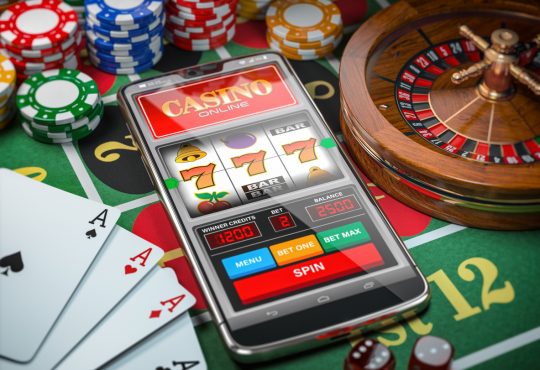
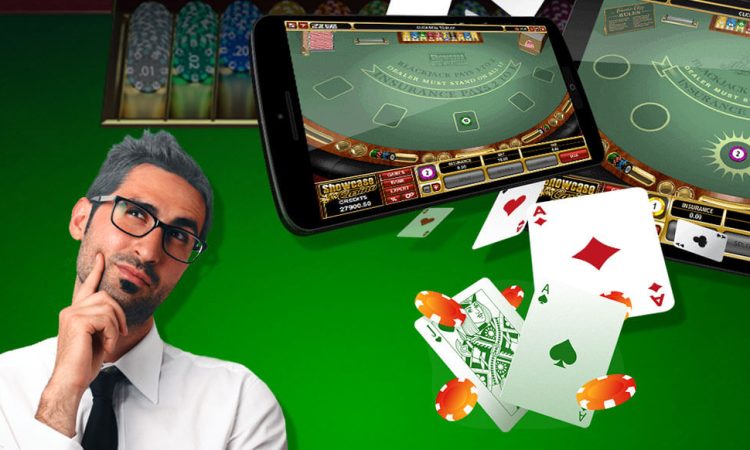
Technology has done for blackjack what it has done for so many classic pastimes: democratized access. Online blackjack has exploded in popularity, offering countless variations with different rules, side bets, and table limits.
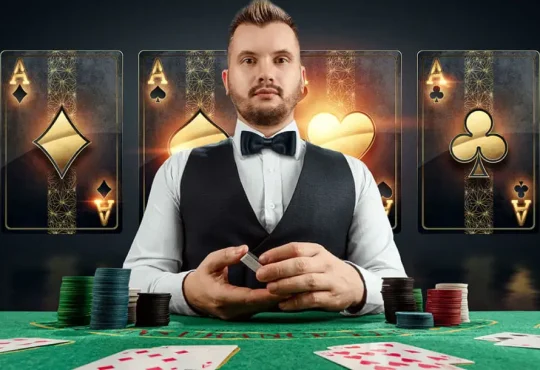
Live dealer blackjack bridges the gap between virtual and physical tables. Players stream a real dealer from a studio and interact via chat, blending convenience with authentic casino atmosphere.
Mobile apps and free simulators have also empowered new players to practice the game endlessly, sharpening their grasp of strategy before risking real money.
Responsible Play: The Other Side of the Table
Like all forms of gambling, blackjack carries risk. The thrill of the next card, the near-miss of a 20 turned 22, the temptation to double down “just one more time”—these are the snares that lead many astray.
Healthy Blackjack Habits
-
Treat the game as entertainment, not income
-
Set strict limits before sitting down at a table
-
Never chase losses—emotional decisions undermine strategy
-
Know when to walk away, win or lose
For those who sense trouble controlling their betting, modern casinos and online platforms increasingly offer self-exclusion tools and partnerships with problem gambling helplines.
Final Thoughts: Why 21 Still Captivates
Blackjack endures not because it’s easy but because it strikes the perfect balance between luck and skill. It’s a game where the casual player can feel the rush of victory after a perfect hit, yet the committed student can spend a lifetime refining their approach.
In the chaos of bright lights and clinking chips, blackjack offers a small, quiet rebellion: the idea that knowledge, discipline, and courage can—at least for a moment—stand up to the house edge. For anyone willing to master its nuances, the game of 21 will always hold an irresistible charm: the chance that with the right card, at the right time, you can beat the dealer—and walk away just a little bit ahead.