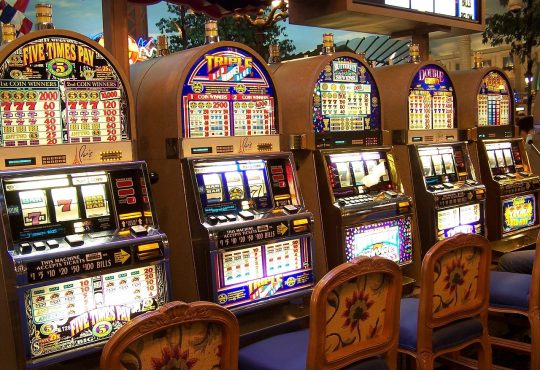



Walk onto any casino floor or log into a digital gaming platform, and you will quickly notice that penny slots are among the most popular attractions. Their bright lights, engaging themes, and low entry barrier make them exceptionally inviting. For many casual players, the name implies a harmless, low-risk form of entertainment where a single dollar can stretch across dozens of spins. However, modern slot machine design has evolved far beyond the classic single-line mechanical games of the past. Beneath the illusion of cheap entertainment lies a mathematical structure that can drain a bankroll much faster than most players realize. Understanding the mechanics behind penny slots reveals why these games often cost significantly more than their name suggests.
The Illusion of the Penny Spin
The primary misconception surrounding penny slots stems from the terminology itself. When a player sees a machine labeled as a penny slot, they naturally assume that each spin costs one cent. In reality, modern video slots operate on complex multi-line configurations and credit multiplier systems.
To activate the game fully and become eligible for maximum payouts or bonus rounds, players are almost always required to bet multiple coins across dozens or even hundreds of paylines simultaneously.
-
A single spin on a machine set to twenty-five paylines with ten credits per line actually costs two hundred and fifty credits.
-
At a penny per credit, that single button press costs two dollars and fifty cents rather than a single penny.
-
Over the course of a standard hourly session consisting of six hundred spins, total wagers can easily scale up to fifteen hundred dollars, far exceeding the initial low-cost expectation.
Understanding Return to Player Percentages
Return to player percentage, commonly abbreviated as RTP, is the theoretical statistical measurement of how much money a slot machine pays back to players over millions of spins. Denominations play a massive role in how casinos configure these percentages. Historically, high-limit games with large denomination requirements offer significantly higher return to player percentages, often hovering around ninety-five to ninety-eight percent.
Conversely, penny slots and lower-denomination machines frequently feature the lowest return to player percentages on the casino floor, sometimes dropping down to eighty-eight or ninety-one percent.
-
The House Edge: Lower return metrics mean the casino builds a much steeper mathematical advantage into low-denomination video slots.
-
Long-Term Drain: The cumulative cost of playing a game with a lower return rate accelerates bankroll depletion over extended gaming sessions.
-
Volume Amplification: Because penny slots encourage rapid, high-volume betting across numerous lines, the house edge extracts money at a relentless pace.
The Psychology of Volatility and Near Misses
Game developers utilize advanced psychological triggers to keep players engaged, and penny slots are prime examples of this design philosophy. Modern video slots are typically built with high volatility, meaning they pay out less frequently, but offer larger potential jackpots when they do hit.
This design creates prolonged dry spells interspersed with sudden, dramatic wins that mask overall net losses. Furthermore, visual and auditory cues are engineered to celebrate small wins that are actually smaller than the total cost of the spin. Winning twenty cents on a spin that cost two dollars is treated by the machine with flashing lights and celebratory music, tricking the brain into perceiving a victory despite losing money on the transaction.
The Danger of Fast-Paced Gameplay
Traditional table games like blackjack or baccarat feature built-in pacing mechanisms. Dealers must shuffle cards, collect chips, and manage bets, which naturally limits the number of individual wagers placed per hour.
Penny slots, by contrast, operate at a breakneck speed. Digital interfaces allow players to execute ten to fifteen spins every single minute without interruption.
-
Autoplay Features: Many online and physical machines feature automated spinning options that remove human hesitation entirely.
-
Compounding Losses: High-speed repetition multiplies the impact of the house edge, turning minor per-spin disadvantages into substantial financial losses in a short timeframe.
-
Sensory Overload: Immersive sound effects and rapid animations distract players from tracking their actual net expenditure over time.
Comparing Penny Slots to High-Denomination Alternatives
Many casual players assume that avoiding high-limit areas is a wise financial choice because it shields them from large losses. Ironically, the opposite is frequently true for disciplined players managing a fixed entertainment budget.
A hundred-dollar bankroll inserted into a dollar denomination machine might burn out quickly if luck is poor, but the player receives a much fairer mathematical trade due to higher return percentages. On a penny slot, that same hundred-dollar bankroll is subjected to a heavier house edge and accelerated spin velocities, often resulting in shorter overall play time despite the smaller individual wager requirements.
Frequently Asked Questions
Why do casinos set lower payout percentages on penny slots?
Casinos allocate lower return percentages to penny slots to offset the high operational costs of maintaining complex video software, licensing popular movie or music themes, and managing heavy physical floor space for multi-line cabinets. Because casual players expect low stakes, operators use lower payout rates to secure a reliable profit margin.
What are paylines and how do they affect the cost of a spin?
Paylines are specific patterns across the reels that determine winning combinations. Modern penny slots often feature fifty to over two hundred paylines. To activate all possible winning combinations, players must place a bet on every line, multiplying the base coin denomination by the active line count.
Can skill influence the outcome of a penny slot machine?
No, modern slot machines operate entirely on random number generators. Every spin is an independent mathematical event unaffected by previous outcomes, betting systems, timing strategies, or player skill.
Do online penny slots have better odds than physical casino slots?
Online penny slots often feature slightly higher return to player percentages compared to land-based casinos because digital operators have lower overhead costs. However, they still maintain a significant house edge and fast-paced gameplay mechanics.
What is bankroll management in the context of slot gaming?
Bankroll management involves setting a strict financial limit for a gaming session and dividing it into predetermined stake sizes. This strategy prevents players from chasing losses and ensures that gambling remains a controlled, affordable form of leisure rather than a financial burden.
Are progressive jackpots worth playing on penny slot machines?
Progressive jackpots pool a tiny fraction of every wager into a massive top prize. While winning a progressive jackpot is life-changing, the odds of hitting it on a penny slot are exceedingly low, and the base game return percentages are usually reduced to fund the massive prize pool.